We respect the deep connection Indigenous Peoples have to their territories and work with them to develop strong relationships that offer mutual benefits. We are committed to further expanding Indigenous participation and benefits within the forest industry. To develop significant partnerships, our engagement and forestry operations are conducted in accordance with our Indigenous Relations Policy.
The policy outlines our resolutions to:
Recognize the United Nations Declaration on the Rights of Indigenous Peoples (UNDRIP);
Acknowledge the calls to action of Canada’s Truth and Reconciliation Commission and seek opportunities to act on those applicable to our business; and
Commit to relevant consultation and obtain, where possible, the free, prior and informed consent (FPIC) of Indigenous Peoples and communities before proceeding with developments.
Indigenous Peoples have occupied their territories since time immemorial. We acknowledge and respect their deep connection to the lands and waters and recognize the legal and constitutional rights they hold within their territories. Indigenous Peoples have an integral role in maintaining a strong, viable, and sustainable forest economy in Canada now and in the future. We are committed to supporting Indigenous representation and participation in the forest industry while cooperatively promoting socioeconomic development opportunities across their communities.
Interfor seeks to engage Indigenous communities when our operations are within their territories with the goal of building positive relationships. We do this through early, ongoing and frequent communication and work together to identify cultural values, protect culturally sensitive areas, and understand how our operations can contribute to community priorities. In many cases, how we engage is guided by protocol agreements with individual Indigenous communities or Nations.
Monitoring & Certification
Many of our agreements with Indigenous Peoples include specific standards for how we engage and operate within their territories, backed by clear expectations for monitoring and review processes to track our compliance. All Canadian woodlands operations are certified to the SFI® Forest Management Standard which includes a foundational management objective to recognize and respect Indigenous Peoples’ rights and traditional knowledge. This is monitored through third-party certification.
Our Ontario operations participate in the Partnership Accreditation in Indigenous Relations (PAIR) program (formerly Progressive Aboriginal Relations), a third-party corporate social responsibility program by the Canadian Council for Indigenous Business (CCIB). PAIR drives performance in four categories: Leadership Actions, Employment, Business Development, and Community Relationships. Interfor's Ontario operations have held PAIR certification at the bronze level since 2022.
Partnership Agreements
Our agreements with Indigenous communities are founded on the following mutually recognized objectives:
Long-term agreements that further meaningful reconciliation and advance true partnership with Indigenous Peoples;
Certainty for our forestry business in Canada; and
Respect for Indigenous culture.
Our relationships have led to signed agreements with 59 Indigenous communities or Nations. The foundations of these agreements reflect our commitment to reconciliation and can be organized into five categories:
Governance
Economic benefit and revenue
Stewardship and sustainability
Capacity building and employment
Community engagement
The foundation of many Indigenous partnerships with Interfor starts with agreements that define our respective interests, identify common visions and objectives, and provide a framework for how we will work together. Through our partnerships, we collaborate with and seek feedback from Indigenous communities on forest management, prioritize community benefits, and seek to strengthen economic and employment opportunities.
Our collaborative forestry agreement with SagamokAnishnawbek First Nation enhances our longstanding relationship with the community by formalizing collaboration in forest management and outlining benefits to the community;
Our MOU (Memorandum of Understanding) with Simpcw First Nation establishes a framework for consultation, stewardship and business to business agreements;
Our agreement with the Penticton Indian Band prioritizes stewardship, includes community benefits, and supports community interests; and
Our agreement with the MatachewanFirst Nation aims to collaborate with and seek feedback from the Nation on forest management, improve stewardship and contribute to community benefits, and strengthen economic and employment opportunities.
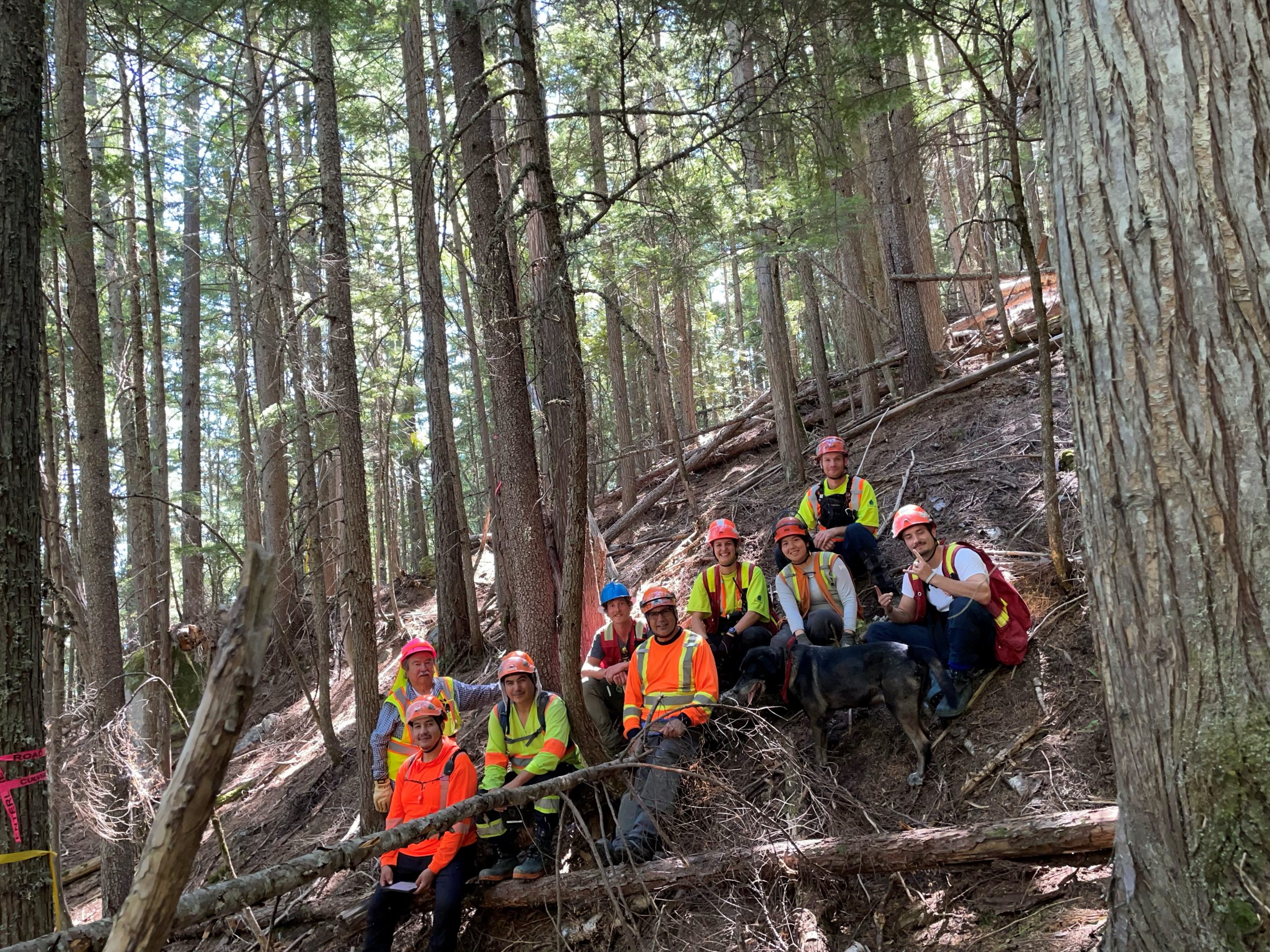
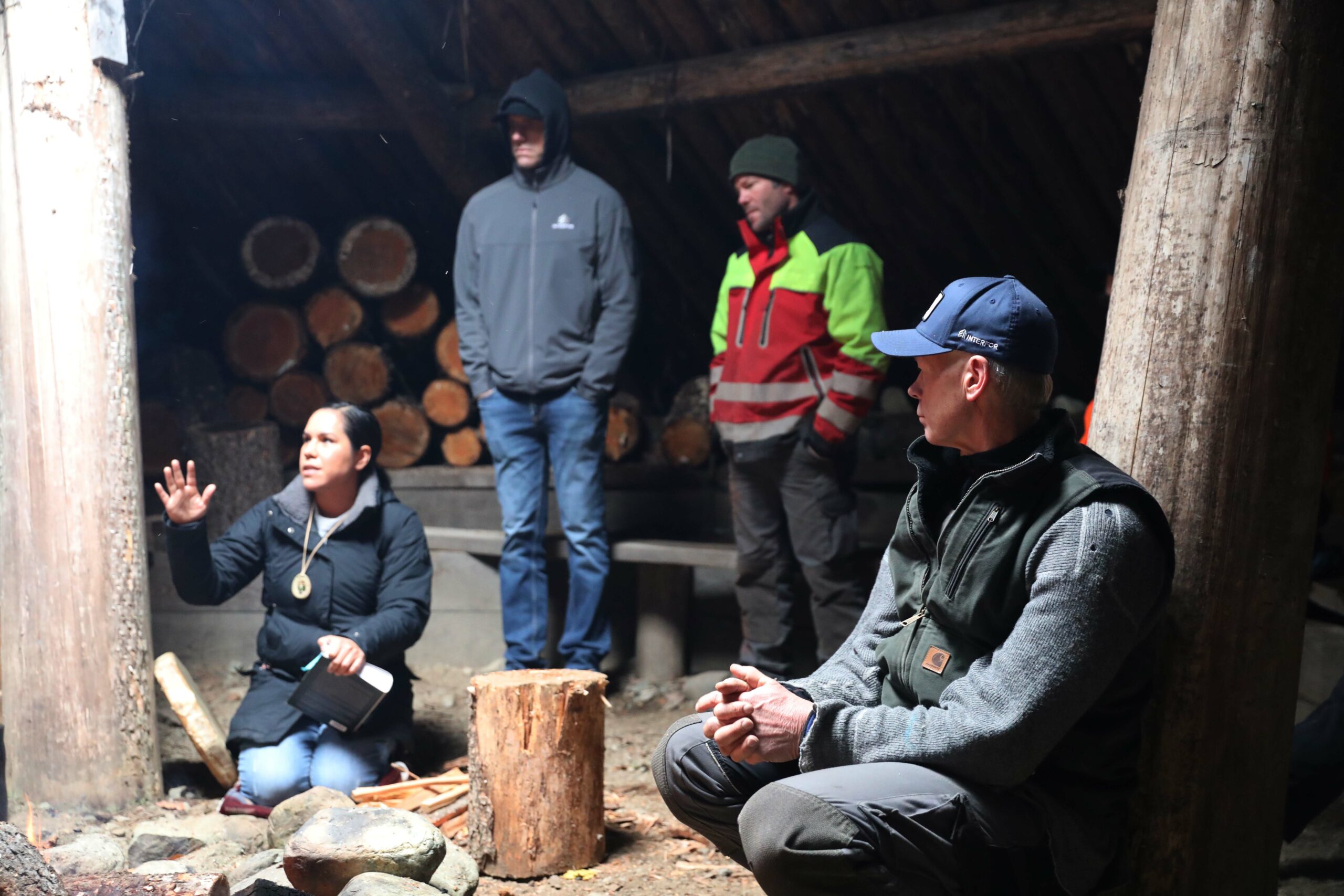
Interfor staff and summer students spent the day with members of the Penticton Indian Band on Tree Farm Licence 3 in the Slocan Valley to discuss the integration of First Nations values into Interfor’s woodlands management.
Our agreements are built on the principle that Indigenous Peoples should benefit from resources within their territories. Through a variety of business partnerships, ranging from supporting Indigenous entrepreneurs to the lease or sale of our tenures, we work with Indigenous partners to generate meaningful and sustainable forestry revenue for their communities.
Recent agreements with Adams Lake Indian Band include log purchases, tenure management and fire salvage revenue sharing;
A standing Timber Purchase and Tenure Management Agreement with OkanaganIndian Band Forestry Limited Partnership provides revenue opportunities to the partnership; and
A tenure management agreement with Neskonlith Indian Band to help them manage their Forest License Volume and provide logs to the mill.
BC Coast Forest Tenure Transfer
As part of our commitment to reconciliation with Indigenous Peoples in Canada, we have been working with the BC Ministry of Forests to sell and transfer some of our forest tenures to First Nations. This aligns with the Truth and Reconciliation Commission of Canada’s call to action #92, which calls on the corporate sector to ensure access to economic benefits for Aboriginal communities. The disposition process aims to achieve a number of objectives, including redirecting benefits from forest resources to Indigenous Peoples, strengthening their participation in the forest industry, allowing them a greater role in protecting their cultural resources, and reducing the concentration of the annual harvest held by large licensees.
In 2025, we successfully transferred 323,769 cubic meters of annual harvest under replaceable forest tenures to 10 different Indigenous-owned organizations within 10 different First Nations:
Cape Mudge Forestry Ltd, Wei Wai Kai First Nation
Nuchatlaht First Nation
T’Se’Kame’ Forestry Limited Partnership, Kwikwasut’inuxw Haxwa’mis First Nation
We work with Indigenous communities to understand traditional knowledge and values so they can be incorporated into joint planning processes that guide our forest planning and operations. We also support Indigenous communities’ stewardship initiatives such as salmon enhancement, habitat restoration, white birch protection, and grizzly bear research.
We have data sharing agreements with the Brunswick House and Chapleau Cree First Nations to help identify cultural and Indigenous values, and will work with them to modify our operations to protect these values;
Our harvesting plans in the Osoyoos Indian Band’s Area of Responsibility—including pre-harvest surveys, joint field tours, and post-harvest reviews—are reviewed by the Band’s members or workers;
We continue to work with Adams Lake Indian Band on referrals and stewardship discussions under a service agreement; and
We have implemented the Simpcw Stewardship Plan within Simpcwùl’ecw (Simpcw Territory), including ongoing management discussions and communication for specific projects.
In Ontario, Interfor is part of the Herbicide Alternative Program 2.0, a collaboration with Wahkohtowin Development GPI (owned and led by three First Nations in Northern Ontario), Indigenous communities, the forest industry, and the provincial Ministry of Natural Resources. It aims to ensure successful forest regeneration by exploring alternatives to chemical herbicides, leveraging Indigenous knowledge, ecological and forestry research, and cutting-edge technologies.
Interfor Adams Lake Division worked extensively with Skwlax te Secwepemculecw, Adams Lake Indian Band and Neskonlith Indian Band through 2024 and 2025 to address salvage harvesting following the 2023 Bush Creek East Fire. Through these salvage project partnerships Interfor purchased logs from ALIB (12,083m3), Neskonlith (3,544m3) and Skwlax (160,853m3). Following salvage efforts, restoration and reforestation activities are being completed
We work with our Indigenous partners to grow their internal capacity through employment and forestry services opportunities. We begin with co-planning, joint forest stewardship and management activities, then create further employment and contracting opportunities through harvesting operations. Together with our partner communities, we share opportunities, recruit, and support Indigenous contractors, employees, and students, and mentor and develop talent. Currently more than a third of our BC woodlands contractors are Indigenous-owned or have Indigenous employees.
The Timiskaming Forest Alliance Inc., of which Interfor is a shareholder, worked with two Indigenous shareholder communities, MatachewanFirst Nation andApitipiAnicinapekNation, and a brushing contractor, to train and provide work terms to interested community members;
An agreement with the Osoyoos Indian Band that provides silviculture employment and economic benefits to the community;
An agreement with the ShuswapBand that will support its involvement in forest road management; and
A number of agreements with the SkwlaxteSecwepemcúlecw’sbusiness arm that provides capacity-building opportunities.
Respect and understanding for our Indigenous partners’ cultures are built through real experience and connection. By engaging and supporting community initiatives, events and projects, we are not only contributing to meaningful work but also gaining understanding and perspective, making us a better partner. Some highlights from our community engagement efforts include:
Supplying Indigenous partners with lumber for community projects such as housing and infrastructure;
Delivering firewood for community members, elders and cultural events;
Delivering logs for cultural purposes;
Donating seedlings to community planting events;
Donating to community activities and tournaments;
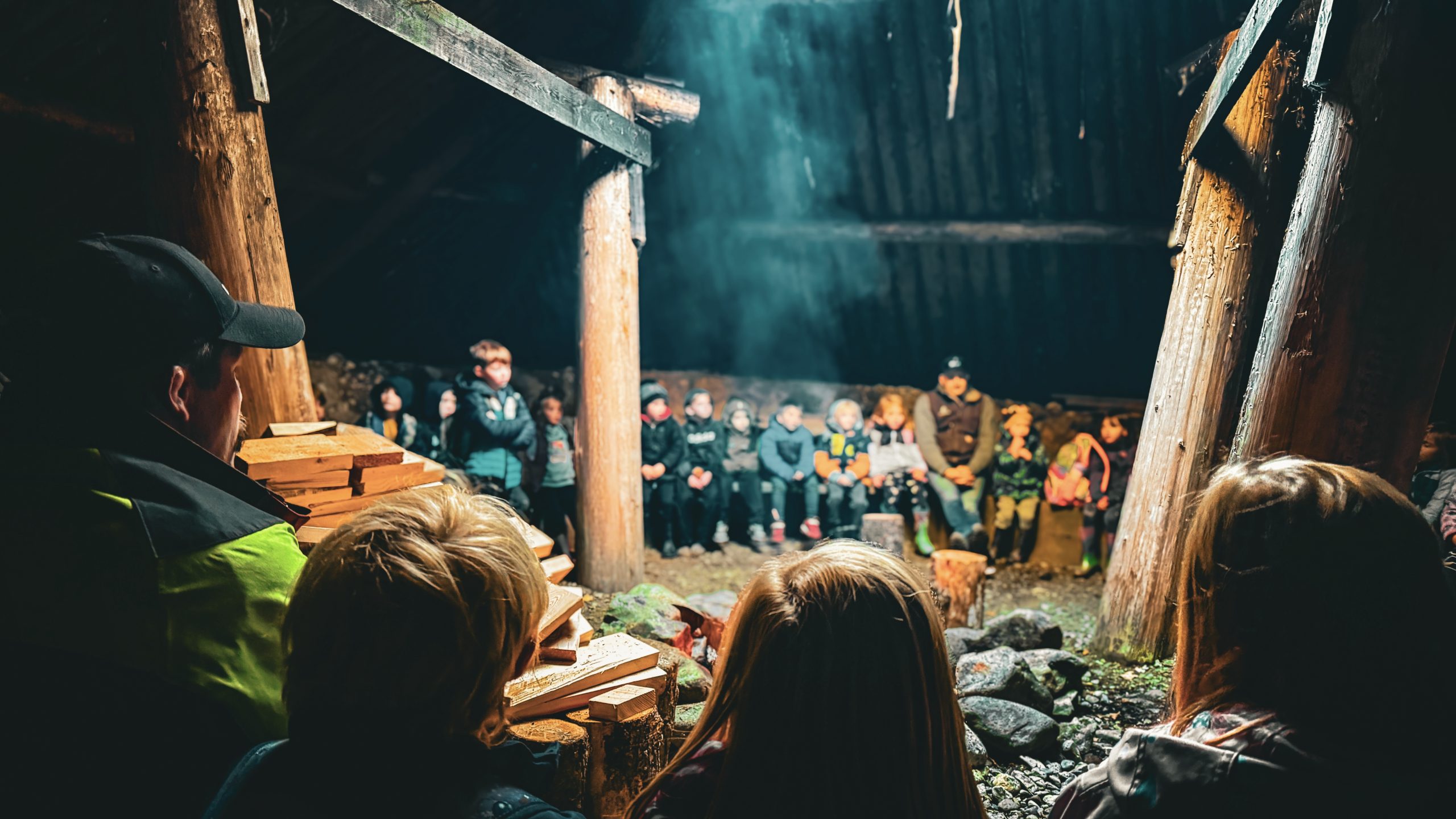
Supporting and participating in Indigenous youth field trips and educational programming;
Supporting and participating in community cultural events and celebrations;
Organizing and participating in community cedar bark gathering trips;
Providing tours of our operations and participating in forestry career events; and
Attending events hosted by Indigenous partners to mark National Indigenous Peoples Day and the National Day for Truth and Reconciliation.
In 2025, Interfor sponsored and/or had staff participate in the following events:
2025 Indigenous Lands Symposium, organized by the Wahkohtowin Innovation Centre;
BC First Nations Forestry Conference – Everything is Connected;
Neskonlith Indian Band Volume purchase Tenure management agreement;
Skwlāx Resource Management (SRM) Golf Fundraiser;
Simpcw Graduation Ceremony and Interfor scholarship presentation (1x $5000);
Simpcw Cultural Day and Cultural Plants Collection Day with Simpcw Language House Staff;
Simpcw Resources Group (SRG) Golf Fundraiser;
Simpcw Enhanced Riparian Management zone and Commercial Thinning field trip;
Adams Lake Indian Band Cultural Camp Field Trip; and
Adams Lake Indian Band Old Growth Deferral Area field trip.
Supporting Youth & Education
In Ontario, we support the Outland Youth Employment Program (OYEP) in collaboration with Temagami First Nation and other industry partners. In 2025, we sponsored a six-week summer camp for Indigenous youth at Esker Lakes, providing land-based education, training, and skills development for participants. We also hosted the group for a tour of the Elk Lake sawmill.
Our Adams Lake Division supported the Simpcw First Nation’s Coho Day at Dunn Creek Hatchery by teaching students from Raft River Elementary School in Clearwater about tree identification.
REFERENCES & METHODOLOGY
We are committed to transparency in our reported metrics and continuous improvement of our methodology. Download our References & Methodology document.
Building value through sound environmental, social, and governance practices
Our commitment to sustainable growth has been the foundation of our success, and to a broader extent, the success of our partners and the communities we serve.
Check out our Sustainability Report and explore how Interfor and our partners are creating a safer, more sustainable, and equitable future for all.